Finding the best auto insurance quote is rarely about finding a single magic number. It is about discovering the optimal intersection of price, coverage quality, and financial stability. According to the National Association of Insurance Commissioners (NAIC), auto insurance rates are highly individualized, meaning the best quote for your neighbor might be terrible for you. By understanding the variables that algorithms use, you can manipulate the data in your favor to secure the lowest possible rate without sacrificing essential protection.
What Factors Influence Your Quote?
When you request a quote, the insurer runs a complex risk assessment. They are trying to predict how likely you are to file a claim and how much that claim will cost. Several non-negotiable factors play a massive role in this calculation:
Driving Record: This is the most critical factor. A clean record signals low risk. Speeding tickets, DUIs, or at-fault accidents will spike your premium.
Location: Insurers look at the frequency of accidents, thefts, and vandalism in your zip code. Urban drivers typically pay more than rural drivers.
Vehicle Type: The make, model, and year of your car matter. Expensive cars cost more to repair, and high-performance cars are statistically involved in more accidents. For example, a sports car will command a higher premium than a minivan.
Liability vs. Full Coverage: Balancing Cost and Protection
The single biggest lever you can pull to change your quote is the level of coverage you select.
- State Minimum Liability: This is the cheapest legal option. It covers the other driver’s medical bills and property damage if you are at fault. However, it pays nothing for your own car or injuries.
- Full Coverage: This includes Liability plus Collision (damage to your car from an accident) and Comprehensive (damage from theft, fire, or weather). While this increases your quote, it is required if you lease or finance your vehicle.

The Secret to the Best Quote: Comparison Shopping
Auto insurance pricing is proprietary; every company has its own “appetite” for different types of drivers. One insurer might specialize in high-risk drivers, while another targets safe drivers with new homes.
Don’t Settle for One Quote: To find the best price, you must compare at least three to five different companies.
Use Aggregators: Online comparison sites allow you to enter your data once and receive quotes from multiple insurers. This is the most efficient way to spot pricing anomalies. For example, you might find that Company A charges $150/month while Company B charges $90/month for the exact same coverage.

Maximizing Discounts to Lower Your Quote
Getting the best quote isn’t just about the base price; it’s about stripping away as many discounts as possible. When filling out a quote form, you must be thorough.
- Bundling: Combining your home (or renters) and auto insurance with the same company often yields the largest discount.
- Telematics Programs: Many insurers now offer apps that track your driving habits (braking, speed, time of day). If you drive safely, you can save significantly. According to Consumer Reports, these programs can save good drivers up to 30%, though they may raise rates for bad drivers.
- Affiliation: Being a member of certain organizations, alumni associations, or the military can unlock exclusive rates.
Where to Get a Quote
- Direct from Carrier: Go to Geico.com or Progressive.com. Good for DIY shoppers.
- Lead Aggregators: Sites like The Zebra or Insurify. They let you see multiple estimates at once.
- Independent Agents: A local broker who works with multiple carriers. This is often the best route for drivers with “complex” records (DUIs, multiple accidents) or high-net-worth individuals needing umbrella policies.
Frequently Asked Questions
Is it true that getting a car insurance quote will lower my credit score?
No, requesting an auto insurance quote does not hurt your credit score. Insurers perform a “soft pull” on your credit to check your insurance score, which is visible to you but does not impact your FICO score. In fact, checking your own credit or getting an insurance quote is considered a consumer-initiated inquiry and has no negative effect on your credit rating.
What information do I need to get an accurate quote?
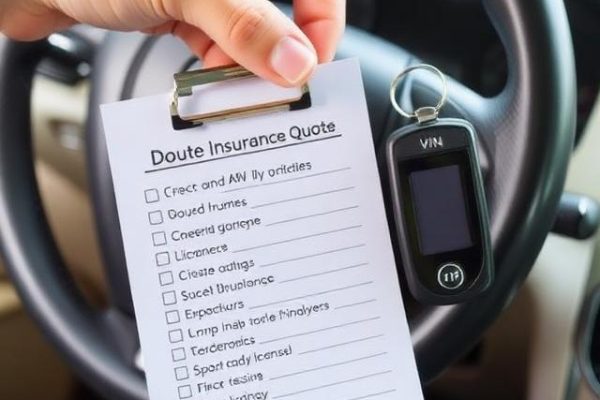
To get a quote that is binding (not just an estimate), you need your driver’s license number, your Vehicle Identification Number (VIN), the make and model of your car, your current address, and the social security numbers of all drivers on the policy. Without this, insurers can only provide a rough estimate, which may change significantly when you actually apply.
How far in advance should I get a quote before my policy renews?
It is best to start looking at quotes about 3 weeks before your current policy expires. This gives you enough time to compare carriers, check the financial stability of the new insurer, and switch without a lapse in coverage. A lapse in coverage, even for a day, can cause your rates to skyrocket in the future.
Why is the online quote different from the final price?
Online quotes are often based on the information you self-report. Once you decide to buy, the insurer will verify your driving record (MVR) and claims history (CLUE) via external databases. If you forgot to mention a speeding ticket from last year, the final price will be higher than the initial online quote to reflect that accurate risk data.
Can I get a quote if I don't own a car yet?
Yes. If you drive frequently but don’t own a car (perhaps you rent or borrow cars), you can get a “non-owner” insurance quote. This provides liability coverage when you drive cars that aren’t yours. It is generally cheaper than standard auto insurance but fulfills the legal requirement to have insurance if you drive regularly.
Shop Around to Save
Securing the best quote requires a proactive approach. It involves cleaning up your driving record, maintaining good credit, accurately assessing your coverage needs, and aggressively comparing rates. Don’t view insurance as a static expense; it is a dynamic financial product that should be shopped for at least once a year.
- Next Step: Ready to start saving? Enter your zip code to [Link: Compare Auto Insurance Quotes] from top-rated carriers in your area and see how much you could be overpaying.